


Across Rajasthan and Gujarat, some of India’s most fascinating historical stories remain hidden behind fading frescoes, intricately carved wooden doors, and courtyards that have grown quiet with time.
Abandoned havelis in Rajasthan and Gujarat offer a glimpse into India’s rich architectural heritage. Once home to prosperous merchants and influential families, these grand mansions now tell stories of changing lifestyles, cultural influences, migration, and economic transformation.
Many historic havelis were constructed between the 18th and early 20th centuries, reflecting the wealth and traditions of their owners. As commercial opportunities shifted towards industrial cities, some families moved away, leaving their ancestral properties underused or unoccupied.
Today, these buildings offer travellers more than beautiful architecture. Their walls reveal how previous generations adapted homes to extreme climates, incorporated ideas from different cultures, organised family life, and expressed social status through artistic details.
Exploring these historic mansions can transform an ordinary journey into a meaningful cultural experience.
What Are Havelis and Why Were Some Abandoned?
A haveli is a traditional mansion or large residence commonly found across parts of northern and western India. Many were built around central courtyards and featured elaborate entrances, decorative balconies, carved windows, and spacious family areas.
In Rajasthan, merchant families often decorated their havelis with colorful frescoes depicting mythology, daily life, commercial prosperity, and changing cultural influences.
In Gujarat, historic residential buildings developed their own architectural identities, influenced by local traditions, craftsmanship, and international design styles.
However, changing economic circumstances gradually affected the use of these properties.
As trade routes evolved, industrial centres expanded, and younger generations relocated to growing cities, some ancestral homes became difficult to maintain.
Divided ownership, costly repairs, and changing residential preferences also contributed to the deterioration of certain buildings.
Not every historic haveli is abandoned today. Some remain private homes, while others have been carefully restored and adapted into museums, heritage hotels, and visitor attractions.
Five Things Historic Haveli Architecture Reveals About the Past
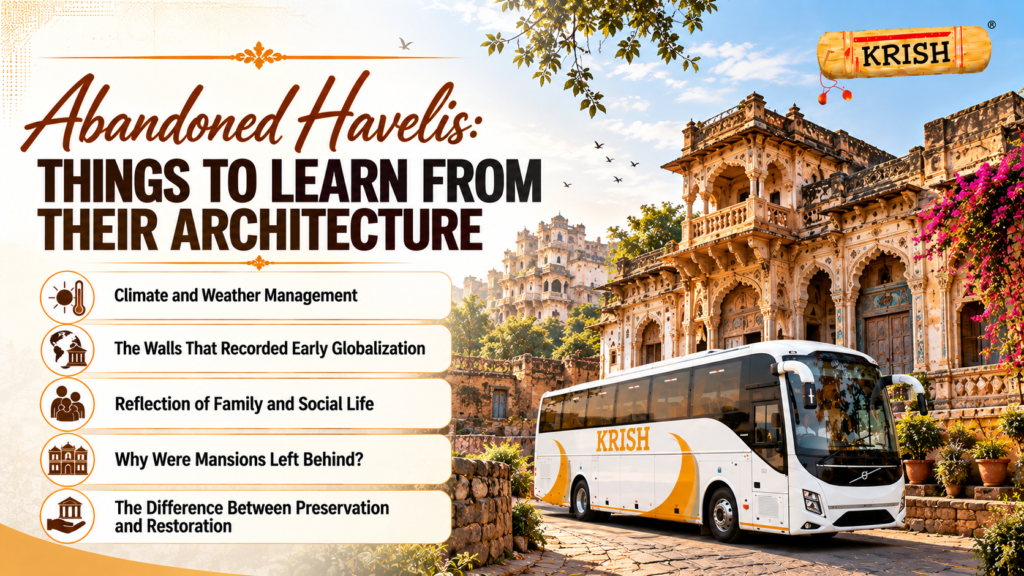
1. Climate and Weather Management Through Traditional Architecture
One of the most remarkable features of traditional haveli architecture is how buildings were designed to respond to local environmental conditions.
Long before modern air-conditioning systems became common, builders used architectural features that could help regulate indoor temperatures and improve comfort.
In the hot and dry regions of Rajasthan, central courtyards played an important role in providing daylight and supporting natural ventilation.
Depending on their orientation, proportions, and surrounding openings, courtyards could encourage air movement and help release accumulated warm air.
Thick masonry walls provided thermal mass, slowing indoor temperature changes. Traditional jaali screens allowed ventilation while filtering sunlight and maintaining privacy.
Shaded corridors, carefully positioned windows, and locally available building materials further contributed to the comfort of these residences.
These features demonstrate how traditional Indian architecture responded to sunlight, airflow, materials, and the surrounding climate.
For modern travellers interested in sustainable architecture, historic havelis provide valuable examples of climate-responsive building design.
2. The Walls That Recorded Early Globalization
Historic havelis were not simply symbols of wealth. Their decorative details also reflected how closely merchant communities were connected to the wider world.
In Rajasthan’s Shekhawati region, painted havelis are particularly famous for frescoes combining religious stories, local traditions, and scenes from everyday life.
Some paintings depict trains, steamships, European figures, and early motor vehicles, reflecting the arrival of new technologies and cultural influences.
These artistic details offer fascinating insights into how ideas, products, and lifestyles travelled across regions.
A different example of cultural exchange can be found in Gujarat’s Sidhpur.
The historic Bohra mansions of Sidhpur feature pastel-colored facades, ornamental balconies, intricate wooden details, and European-influenced architectural features.
These distinctive houses reflect the cultural and commercial connections of the Dawoodi Bohra community.
For heritage enthusiasts, the paintings, carvings, and decorative elements of historic havelis provide a visual record of India’s changing relationship with the wider world.
3. How Havelis Reflect Traditional Family and Social Life
A traditional haveli was much more than a large residential building. It was often an organised environment designed to accommodate family activities, social interactions, and, in some households, business functions.
Many havelis featured multiple courtyards and separate areas for different household activities.
In certain merchant residences, an outer courtyard or mardana area was associated with receiving male visitors and conducting business.
More private inner spaces, sometimes described as zenana, were associated with women and domestic activities.
However, these layouts varied depending on region, community, household wealth, and historical period.
The arrangement of rooms, corridors, entrances, and courtyards provides insights into how families balanced privacy, hospitality, and social expectations.
Even decorative doorways and balconies can reveal details about the lifestyle and status of the people who once occupied these homes.
Exploring a historic haveli with a knowledgeable heritage guide can help visitors understand architectural features that might otherwise go unnoticed.
4. Why Were Historic Mansions Left Behind?
The abandonment of some havelis reflects a larger story of economic and social transformation.
Many merchant families originally built grand residences in towns connected to regional and international trading networks.
As industrialization progressed and economic opportunities shifted towards cities, some families relocated for business, education, and employment.
Over time, ancestral properties were used less frequently.
Maintaining large historic buildings could also become challenging, especially when ownership was divided among multiple family members.
Traditional construction materials, skilled craftsmanship, and structural repairs often required substantial investment.
Changing housing preferences further influenced the future of these residences.
While some properties were preserved by their owners, others were adapted for commercial or tourism-related purposes. Some deteriorated because restoration and maintenance became difficult.
For travellers, understanding these circumstances adds meaning to the experience of visiting historic neighborhoods.
An empty mansion is not merely an abandoned structure. It can represent generations of commercial success, family history, migration, and social change.
5. The Difference Between Preservation and Restoration
The condition of many historic havelis highlights the importance of architectural conservation.
Preserving a heritage building involves protecting its existing materials, structural features, and historical character.
Restoration generally involves carefully returning particular elements or parts of a building to an earlier documented condition.
Both require specialized knowledge and thoughtful planning.
Traditional lime-based finishes, masonry, wooden structures, and painted frescoes can be vulnerable to inappropriate repairs.
Modern coatings and poorly planned structural modifications may cause damage when they are incompatible with older materials.
Effective conservation begins with a careful assessment of foundations, roofing, structural stability, moisture problems, and the causes of deterioration.
Importantly, conservation does not always mean making an old building look completely new.
Original materials, weathered surfaces, and historical details can hold valuable information about the building’s past.
Protecting these features helps preserve the authenticity of India’s architectural heritage for future generations.
Where Can You Explore Historic Havelis in Rajasthan and Gujarat?
Travellers interested in abandoned mansions, traditional architecture, and heritage tourism can explore several destinations across Rajasthan and Gujarat.
While some buildings are vacant or deteriorating, others remain occupied, privately owned, restored, or open to authorized visitors.
Mandawa, Rajasthan – The Town of Painted Havelis
Located in Rajasthan’s Shekhawati region, Mandawa is known for its historic merchant mansions and elaborate wall paintings.
Its traditional streets feature buildings decorated with frescoes, carved entrances, and architectural details that reflect the town’s commercial history.
Mandawa is an excellent destination for travellers interested in photography, traditional craftsmanship, and the cultural history of Rajasthan.
Nawalgarh, Rajasthan – A Heritage Destination for Art Lovers
Nawalgarh is another important destination within the Shekhawati region.
The town is particularly well known for its painted havelis and historic architecture.
Visitors can explore authorized heritage attractions and discover the artistic traditions that once flourished among wealthy merchant communities.
The town’s frescoes offer insights into religious beliefs, everyday life, and changing cultural influences.
Dundlod, Rajasthan – Historic Forts and Traditional Mansions
Dundlod is known for its historic fort and havelis, which reflect the architectural traditions of the Shekhawati region.
The area’s heritage buildings provide opportunities to appreciate traditional construction methods, decorative craftsmanship, and the history of regional settlements.
Visitors should confirm access to individual properties before planning their visit.
Sidhpur, Gujarat – The Colorful Bohra Heritage Houses
Sidhpur offers a distinctive heritage experience in Gujarat.
Its historic Bohra Vad neighborhood is particularly notable for its colorful mansions, decorative wooden facades, and European-influenced architectural styles.
Many houses display pastel shades, elaborate balconies, and ornamental features associated with the town’s Dawoodi Bohra heritage.
A respectful walk through accessible public streets can offer visitors an opportunity to appreciate this unique architectural environment.
How to Explore Historic Havelis Safely and Responsibly
Exploring old architecture can be rewarding, but heritage tourism should always priorities safety and respect for local communities.
Not every building that appears deserted is abandoned. Some properties remain privately owned, occupied, or maintained by caretakers.
Before exploring a historic haveli, keep these recommendations in mind:
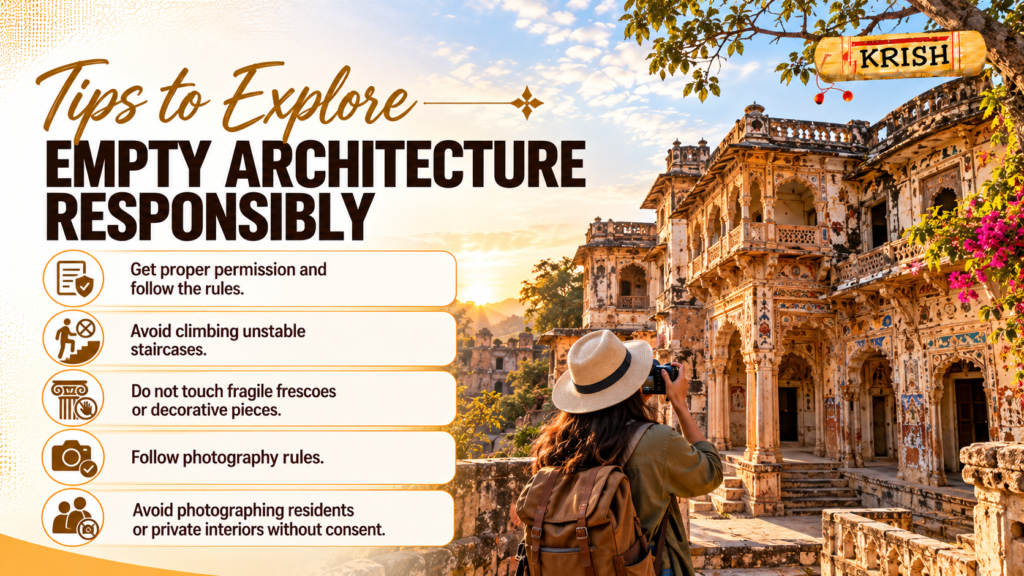
- Obtain proper permission: Enter only buildings and areas where visitor access is permitted.
- Avoid unstable structures: Do not climb damaged staircases, enter unsafe rooms, or walk across deteriorating roofs.
- Protect historic artwork: Never touch fragile frescoes, carvings, or decorative surfaces.
- Respect photography restrictions: Follow local rules and avoid photographing residents or private interiors without consent.
- Consider a local heritage guide: Experienced guides can explain the cultural significance of buildings and help visitors understand access restrictions.
- Support local communities: Where possible, use authorized local guides and heritage services.
Responsible exploration helps protect historic buildings while ensuring that heritage tourism remains respectful of the people and communities connected to them.
Planning a Heritage Road Trip Through Rajasthan and Gujarat
Historic havelis are often spread across smaller towns and traditional neighborhoods, making road travel a practical way to explore them.
A well-planned heritage road trip allows visitors to experience architecture, local culture, museums, markets, and traditional crafts at a comfortable pace.
Heritage Road Trip Ideas
Rajasthan Heritage Route: Mandawa – Nawalgarh – Dundlod
These Shekhawati destinations can be combined into a heritage-focused road trip featuring traditional mansions, painted frescoes, and historic settlements.
Travellers can plan stops around authorized heritage attractions, museums, and local cultural experiences.
Gujarat Heritage Route: Ahmedabad – Sidhpur – Patan – Modhera
Travellers starting from Ahmedabad can consider a heritage itinerary incorporating Sidhpur’s Bohra houses alongside the wider region’s historic attractions.
The itinerary can be adjusted according to the available travel time, attractions, and visitor preferences.
Choosing the Right Vehicle for Your Heritage Journey
When planning travel across multiple destinations, selecting a suitable vehicle can make the journey more convenient.
Families may prefer a spacious SUV for passenger comfort and luggage requirements.
Groups travelling together can consider minibuses, tempo travellers, or larger buses depending on group size and travel needs.
Before finalising a vehicle rental, compare passenger capacity, luggage space, kilometre allowances, driver charges, tolls, and parking arrangements.
For travellers starting from Ahmedabad, Krish Travels’ vehicle rental options include vehicles suitable for family trips and group journeys.
Choosing comfortable transportation and allowing sufficient time at each destination can help visitors enjoy historic architecture without rushing.
Frequently Asked Questions About Abandoned Havelis
Why are so many havelis abandoned in Rajasthan?
Some historic havelis became vacant as merchant families relocated to larger commercial and industrial cities. Divided property ownership, expensive maintenance, and changing residential preferences also contributed to their deterioration.
Where can tourists see painted havelis in Rajasthan?
Mandawa and Nawalgarh in the Shekhawati region are well-known destinations for historic painted havelis. Visitors should check which individual properties offer public access or guided visits.
What makes Shekhawati havelis famous?
Shekhawati havelis are particularly famous for their elaborate frescoes, which depict religious stories, traditional lifestyles, historical developments, and changing cultural influences.
What is special about the Bohra havelis of Sidhpur?
The Bohra heritage houses of Sidhpur are known for their pastel-colored facades, intricately decorated wooden features, balconies, and European-influenced architectural details.
Are abandoned havelis safe to explore?
Not necessarily. Some deteriorating buildings may have unstable structures or restricted access. Visitors should avoid authorized entry and explore only areas confirmed as safe and accessible.
Can I plan a heritage road trip from Ahmedabad?
Yes. Ahmedabad can serve as a starting point for heritage travel within Gujarat and longer journeys into Rajasthan. Travellers can choose suitable vehicles and plan stops according to their itinerary and group size.
Empty Havelis Are More Than Ruins
Abandoned havelis in Rajasthan and Gujarat reveal how architecture reflects climate, commerce, family life, and economic change.
Their painted walls preserve evidence of artistic traditions and cultural connections. Their courtyards demonstrate thoughtful responses to local environmental conditions. Their empty rooms tell stories of migration and changing lifestyles.
Meanwhile, their deteriorating structures highlight the growing importance of heritage conservation.
For thoughtful travellers, these buildings provide an opportunity to look beyond beautiful facades and understand the people, communities, and traditions that shaped them.
Every preserved doorway, restored fresco, and carefully maintained courtyard helps keep an important part of India’s history visible for future generations.
Whether you are interested in architecture, photography, history, or cultural tourism, exploring historic havelis can bring a different perspective to your journey.
Planning a Heritage Road Trip from Ahmedabad?
Make your heritage journey more comfortable with a vehicle suited to your travel requirements.
Explore the vehicle rental options at Krish Travels or contact the team to discuss your travel plans.


Comments are closed