


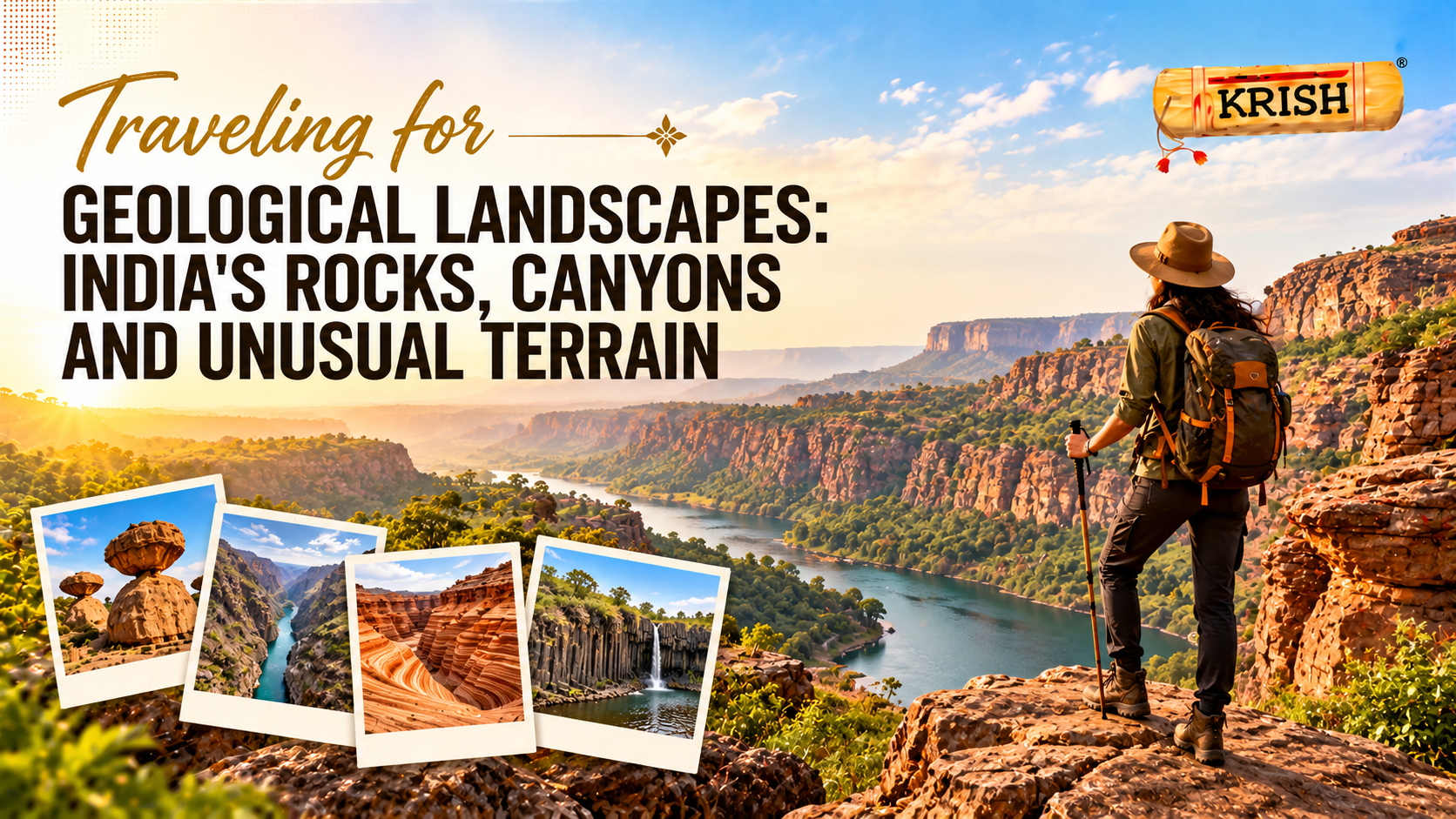
India is home to some of the world’s most fascinating natural landscapes. Beyond famous monuments, beaches, and hill stations, the country offers dramatic canyons, meteorite craters, towering rock formations, and vast salt flats that reveal millions of years of geological history.
For travelers looking for offbeat travel destinations in India, these places offer something different from conventional sightseeing. Each landscape tells a story of natural forces, from river erosion and volcanic activity to meteorite impacts and the gradual transformation of the Earth’s surface.
Whether you’re planning a family vacation, photography trip, or adventure-filled road journey, exploring the geological wonders in India can turn an ordinary holiday into a memorable experience.
Top 7 Geological Wonders in India Worth Exploring
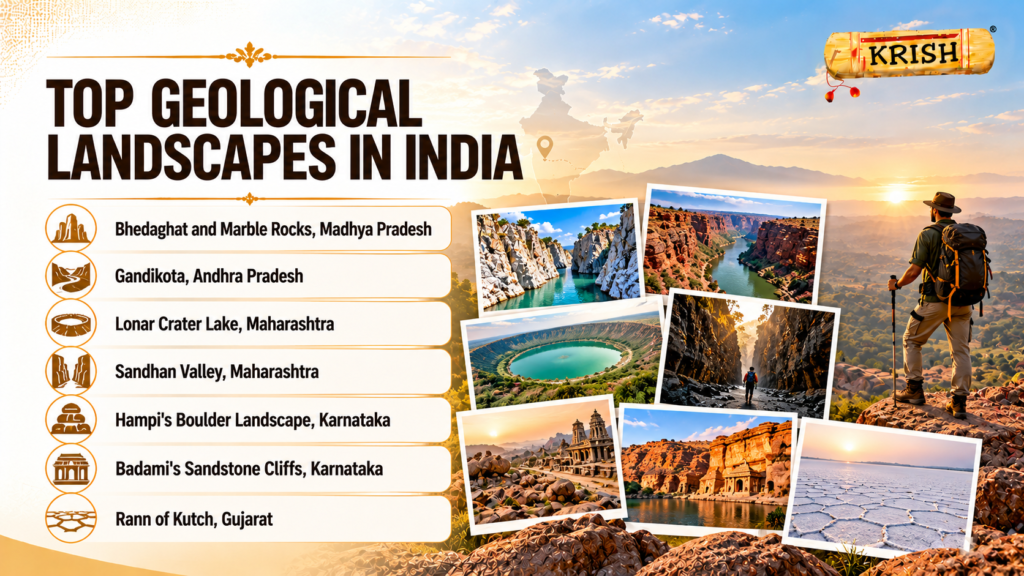
From Madhya Pradesh’s marble cliffs to Gujarat’s white salt desert, here are seven remarkable geological landscapes worth adding to your travel plans.
1. Bhedaghat Marble Rocks, Madhya Pradesh — A Spectacular River Gorge
Located near Jabalpur, Bhedaghat is one of the most beautiful geological landscapes in India. The destination is known for its towering marble cliffs through which the Narmada River flows, creating a striking natural gorge.
The cliffs display shades of white, grey, and pale pink, with their appearance changing throughout the day as sunlight reflects off the rock surfaces.
One of the best ways to experience Bhedaghat is by taking a boat ride along the Narmada, subject to seasonal operating conditions. Visitors can also explore Dhuandhar Falls, where the river plunges dramatically and creates a mist-like effect.
Why visit? Bhedaghat combines remarkable natural scenery, river landscapes, and photography opportunities, making it an appealing destination for families and nature lovers.
Travel tip: Check boat-service availability before visiting, especially during periods of high river flow.
2. Gandikota Canyon, Andhra Pradesh — India’s Grand Canyon
Gandikota is among the most impressive canyon landscapes in India. Located in Andhra Pradesh’s Kadapa region, it features a dramatic gorge formed by the Penna River cutting through ancient sedimentary rock formations known as Gandikota quartzite.
Often called the “Grand Canyon of India,” Gandikota attracts travelers with its rugged cliffs, layered rock formations, and panoramic river views.
The surrounding landscape is particularly attractive during sunrise and sunset, when softer light brings out the textures and colours of the canyon.
Beyond its geological appeal, visitors can explore the historic Gandikota Fort, which adds a cultural dimension to the experience.
Why visit? Gandikota is ideal for travelers seeking unusual natural wonders, dramatic viewpoints, and a combination of geology and heritage.
Travel tip: Carry drinking water and wear comfortable shoes. Stay away from unprotected cliff edges, particularly while taking photographs.
3. Lonar Crater Lake, Maharashtra — A Meteorite Impact Wonder
Lonar Crater Lake is one of the most extraordinary geological tourist places in India.
Located in Maharashtra’s Buldhana district, the crater was formed when a meteorite struck the basaltic rock of the Deccan Plateau.
Unlike conventional lakes formed by rivers or glaciers, Lonar occupies a nearly circular impact depression. Its saline and alkaline lake water adds to the location’s scientific significance.
The surrounding slopes, exposed rock surfaces, vegetation, and ancient temples make the destination interesting for both travelers and geology enthusiasts.
Why visit? Lonar offers an opportunity to witness a geological feature created by a meteorite impact, rather than the usual processes of river erosion or mountain formation.
Travel tip: Check local access restrictions and walking conditions before attempting trails around the crater.
4. Sandhan Valley, Maharashtra — The Valley of Shadows
Hidden within the Sahyadri mountain range, Sandhan Valley is one of Maharashtra’s most distinctive natural landscapes.
Also known as the “Valley of Shadows,” this narrow gorge is surrounded by steep rock walls that allow only limited sunlight to reach some sections.
Unlike roadside viewpoints, exploring Sandhan Valley often involves trekking through uneven terrain, rocky passages, and sections that may require specialist equipment or guidance.
The dramatic formations make it a popular destination for adventure enthusiasts, photographers, and travelers interested in unusual terrain.
Why visit? Sandhan Valley provides an immersive experience of a canyon-like landscape rather than simply a distant view of one.
Travel tip: Guided activities are recommended where technical assistance is needed. Check weather forecasts and trail accessibility, particularly during the monsoon.
5. Hampi’s Boulder Landscape, Karnataka — Nature Meets History
Hampi is widely recognised for its historic temples and Vijayanagara-era ruins, but its extraordinary granite boulder formations are equally captivating.
Massive rocks appear balanced across hillsides, clustered around ancient monuments, and scattered along the Tungabhadra River.
These unique rock formations in India developed through long periods of weathering and erosion, which gradually shaped the granite into rounded and irregular forms.
The contrast between ancient architectural structures and naturally sculpted terrain creates one of India’s most distinctive travel experiences.
Hampi’s combination of cultural heritage and dramatic scenery also makes it an excellent destination for landscape photography.
Why visit? Hampi offers an unusual combination of geological formations, historic architecture, and expansive natural surroundings.
Travel tip: Visit during cooler hours, follow designated routes, and avoid climbing unstable boulders or restricted monuments.
6. Badami Sandstone Cliffs, Karnataka — Where Geology Meets Architecture
Badami is famous for its reddish sandstone cliffs, ancient cave temples, and picturesque setting around Agastya Lake.
The sandstone formations are visually striking, especially when sunlight highlights their warm red and orange tones.
What makes Badami particularly fascinating is the relationship between its natural geology and historical architecture.
Centuries ago, skilled craftspeople carved elaborate cave temples directly into the sandstone cliffs, transforming the existing rock landscape into remarkable religious and cultural spaces.
Visitors can combine Badami with nearby heritage destinations such as Aihole and Pattadakal for an extended Karnataka road trip.
Why visit? Badami shows how geological formations can influence architecture, culture, and the development of historic settlements.
Travel tip: Plan outdoor exploration during the morning or late afternoon, particularly in warmer months.
7. Rann of Kutch, Gujarat — India’s Vast White Salt Desert
The Great Rann of Kutch is one of the most unusual natural landscapes in India.
Unlike rocky canyons or mountain formations, this vast seasonal salt marsh is known for its seemingly endless white salt-covered terrain.
The landscape changes with seasonal conditions. During wetter periods, portions of the Rann may be inundated, while the dry season reveals expansive salt flats.
Sunrise, sunset, and moonlit views can make the white landscape especially memorable.
Travelers can combine a visit to the White Rann with nearby Bhuj, traditional craft villages, and cultural attractions across Kutch.
Why visit? The Rann of Kutch demonstrates how evaporation, seasonal water movement, and geological processes can create an extraordinary landscape.
Travel tip: Check the latest entry requirements and apply for the relevant White Rann visitor permit when required.
What Is the Best Time to Visit India’s Geological Landscapes?
The ideal season depends on the destination, regional weather, and the activities planned.
For many exposed rock landscapes, the cooler months from approximately October to March offer more comfortable sightseeing conditions. However, local circumstances can vary significantly.
Monsoon rainfall can affect access to valleys, trekking routes, and boat services. Similarly, extreme summer temperatures can make cliffside viewpoints and rocky terrain uncomfortable during the middle of the day.
Before traveling, check local tourism advisories, accommodation availability, road conditions, and restrictions for protected or sensitive areas.
How to Plan a Geological Road Trip in India
Exploring India’s natural rock formations and unusual landscapes requires thoughtful planning, especially because many destinations are spread across different states.
Rather than trying to cover all seven destinations in a single journey, travelers can create regional itineraries.
A Gujarat road trip could focus on the Rann of Kutch, Bhuj, and nearby cultural destinations. In Karnataka, Hampi and Badami can form part of a multi-day heritage and geology tour.
Maharashtra offers opportunities to explore Lonar Crater or plan a separate adventure to Sandhan Valley, while Bhedaghat and Gandikota can be included in journeys through their respective regions.
Before departure, keep these essential tips in mind:
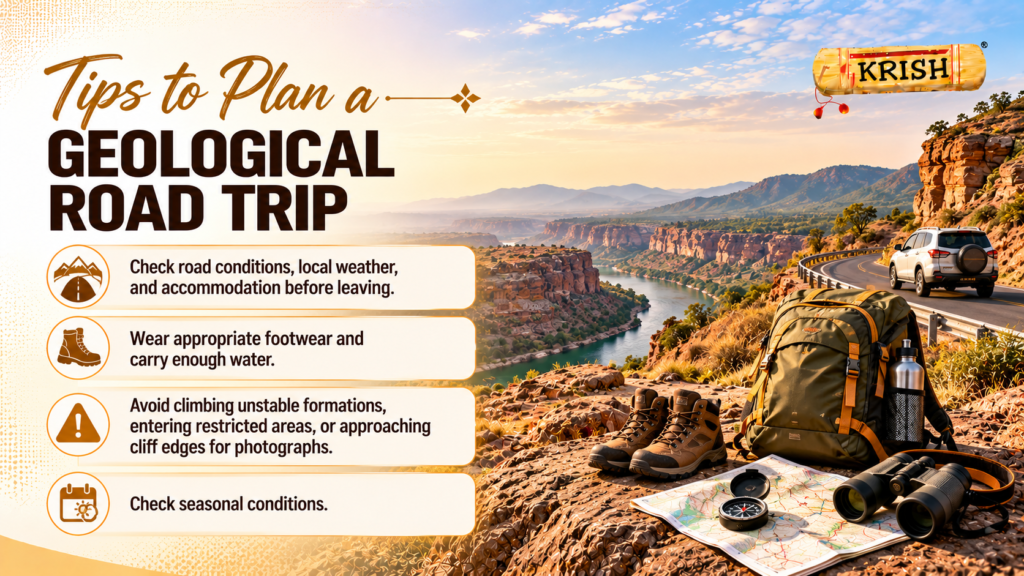
- Check road conditions, seasonal restrictions, weather forecasts, and accommodation availability.
- Carry drinking water, sun protection, suitable footwear, and essential travel supplies.
- Avoid unstable rocks, restricted archaeological sites, and dangerous cliff edges.
- Allow adequate time for sightseeing rather than rushing between multiple destinations.
- Choose comfortable transportation suited to the route, passenger count, and luggage requirements.
For additional planning advice, read our guide on SUV rentals for family road trips.
Choosing the Right Vehicle for a Geological Road Trip
The right vehicle can make a significant difference when traveling to destinations involving long highway journeys, sightseeing stops, and changing road conditions.
For smaller families, a comfortable SUV or a Toyota Innova Crysta rental can be a practical choice for suitable road routes.
For families or friends traveling together, exploring minibus rental options for group travel can help everyone travel in one vehicle instead of coordinating multiple cars.
An AC Urbania on rent in Ahmedabad can suit groups seeking spacious, air-conditioned transportation for longer journeys.
For larger travel groups, a 29-seater AC bus rental may offer appropriate seating capacity, subject to destination accessibility and parking arrangements.
Before confirming any booking, travelers should check passenger capacity, luggage allowance, driver charges, kilometre limits, tolls, state taxes, and route accessibility.
Frequently Asked Questions About Geological Wonders in India
Which are the most famous geological wonders in India?
Some remarkable geological wonders in India include Bhedaghat Marble Rocks, Gandikota Canyon, Lonar Crater Lake, Sandhan Valley, Hampi’s granite boulders, Badami’s sandstone cliffs, and the Great Rann of Kutch.
Which geological destination in India is best for a road trip?
The best destination depends on the starting location and interests of the travelers. The Rann of Kutch is appealing for a Gujarat road trip, while Hampi and Badami are excellent choices for combining geology and heritage in Karnataka.
When should travelers explore geological landscapes in India?
The cooler, drier months are generally more comfortable for many geological destinations. However, weather, access restrictions, and the type of activity should determine the final travel dates.
Can families visit India’s geological attractions?
Yes. Several attractions have established visitor facilities and viewpoints. Families should choose accessible locations and avoid technically demanding treks or unsafe terrain.
Discover India’s Geological Wonders with Krish Travels
India’s geological landscapes offer a refreshing alternative to conventional sightseeing. From the impressive marble cliffs of Bhedaghat to the meteorite crater at Lonar and the expansive salt flats of Kutch, every destination tells a unique story about our planet.
Whether planning a family road trip, a group getaway, or a longer journey through multiple destinations, comfortable transportation helps make the experience more convenient.
Plan your next road trip with Krish Travels Pvt. Ltd.. Explore our vehicle rental options and contact our team to discuss a suitable vehicle for your group, route, and travel requirements.
Because sometimes, the most remarkable travel destinations are not monuments built by people, but landscapes that nature has been shaping for millions of years.


Comments are closed